Teresa Low: From Global CMO to Coach, Artist and a Life Beyond One Title
Alicia Williams · September 20, 2026
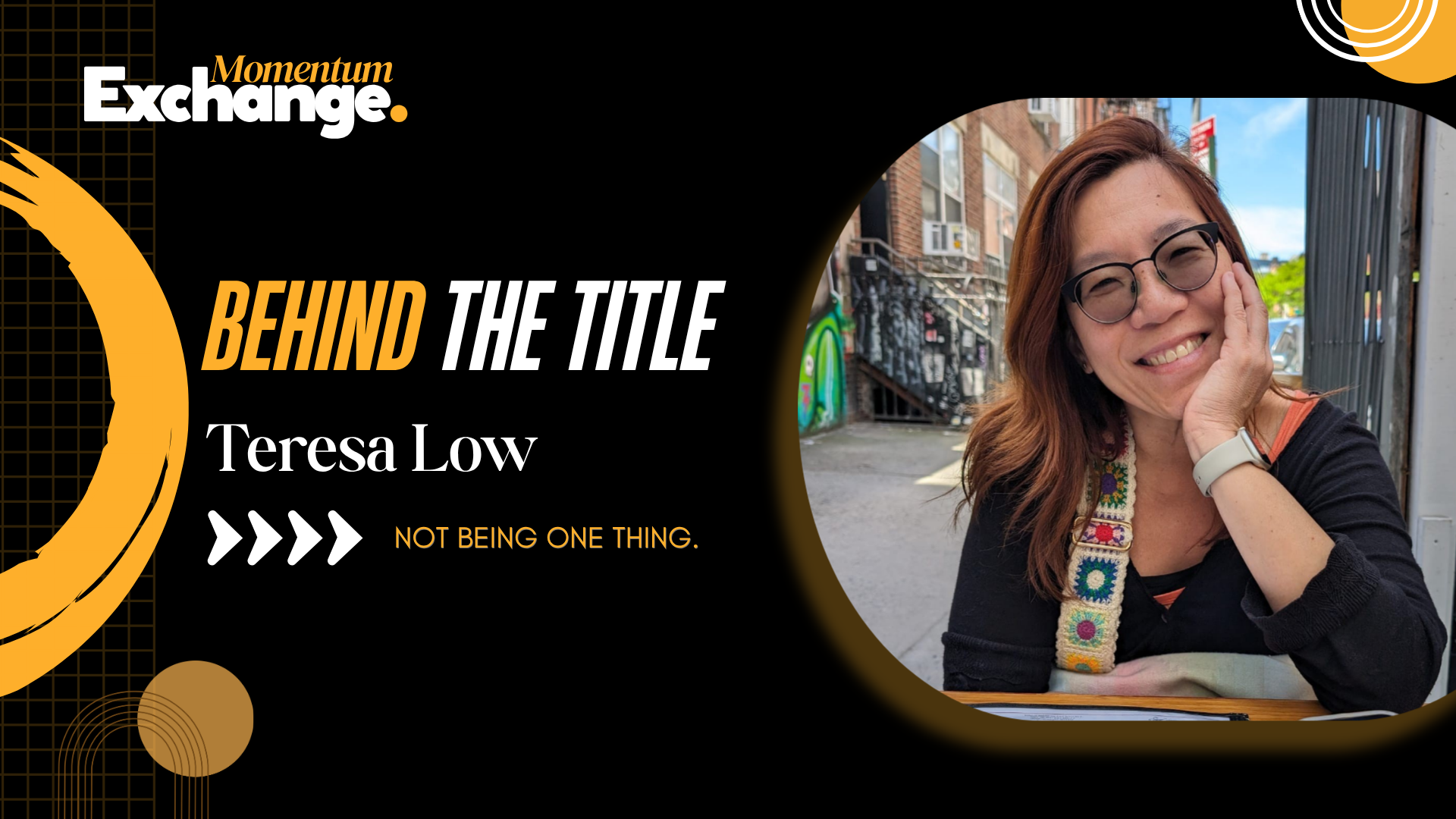
Behind the polished titles are the stories we rarely hear. Teresa Low’s includes rejection, reinvention, toxic leadership, unexpected pivots, and learning to make room for every version of herself.
I’ve always been more interested in how someone became who they are than the polished version of what they’ve achieved.
So I’m starting a series about the stories behind the titles: the decisions, wrong turns, people, failures, lucky breaks, and lessons that rarely make the bio.
Teresa Low felt like exactly the right person to start with.
<3Alicia
Teresa Low Was Never Just One Thing
[

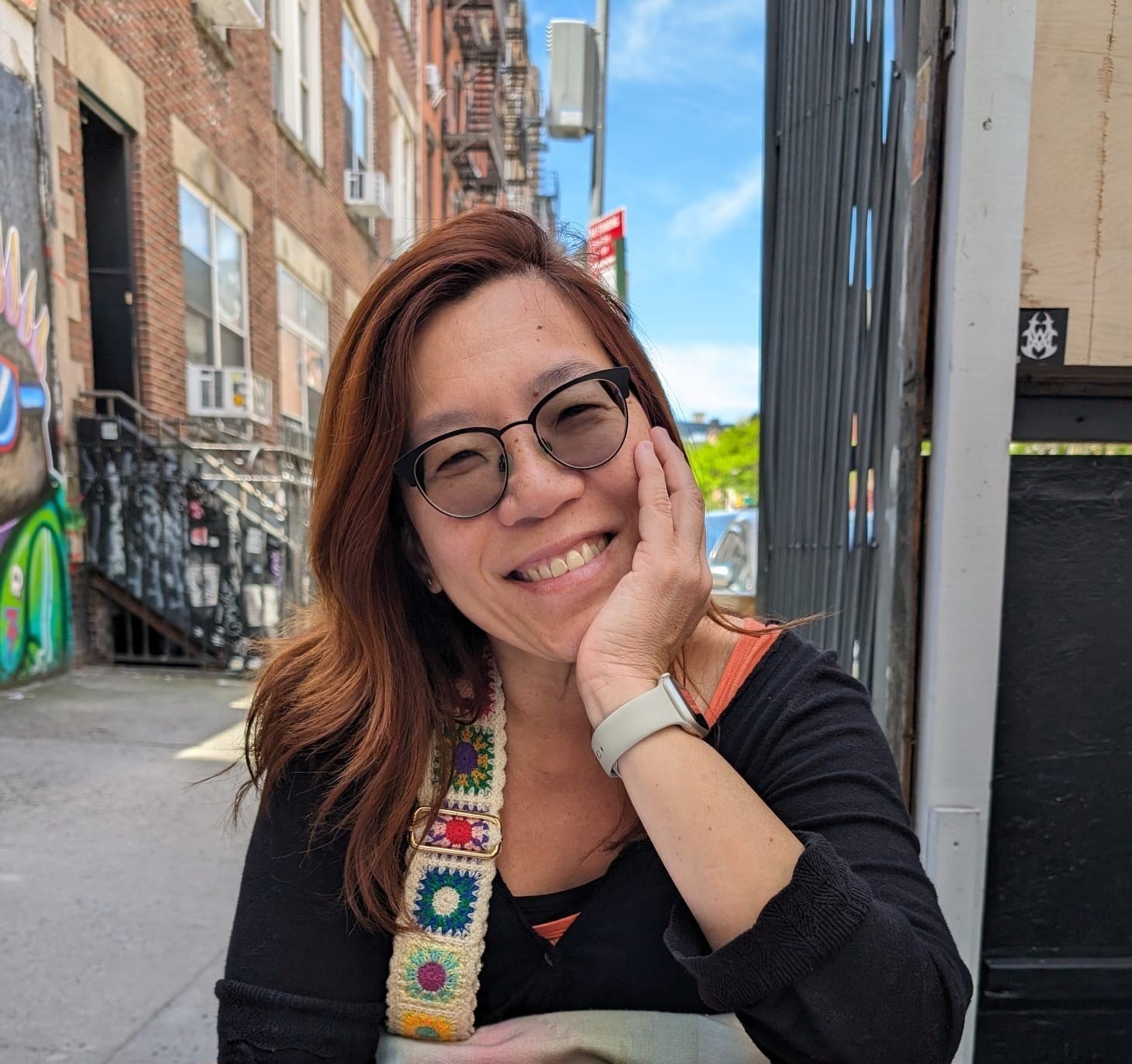
There was a furry blanket draped over the back of my chair, and somehow, within minutes, Teresa and I had turned it into a Game of Thrones set piece.
“Maybe I should add swords behind it,” I suggested.
Teresa immediately improved the idea. “Just do it and see if anyone notices.”
We laughed, and somewhere between imaginary medieval weaponry and the actual reason we were there, I got my first glimpse of Teresa.
She is thoughtful without taking herself too seriously, deeply reflective without being overly polished, and remarkably willing to tell you about the parts of a successful career that would never make it into an executive bio.
And on paper, Teresa’s bio is stellar.
She began her career in Singapore, built a global marketing career in the United States, became a CMO, raised two children while serving as her family’s sole breadwinner, moved into executive coaching, returned to her art and is now preparing to assist a professor at Columbia University, and she’s just getting started in this new chapter!
It is the kind of résumé that can make another ambitious person sit up a little straighter.
What I quickly learned, though, is that the polished résumé is not remotely the whole story.
In fact, Teresa’s career began with a fairly impressive amount of rejection.
Every Hotel Said No. Ogilvy Said Yes.
She graduated from the National University of Singapore convinced she wanted to work in hospitality and proceeded to apply to what sounds like every hotel operating within reasonable mailing distance.
“I applied to every single hotel in Singapore,” she told me.
Every single one rejected her. Teresa had a strong degree, plenty of ambition and one small problem: no hotel management degree.
Looking back, she can smile at how certain she was about a path that ultimately, cleared the way for the one she was truly meant to build.
I could relate, as someone who graduated into the 2008 recession, I also became intimately familiar with the polite corporate version of “not at this time.”
At twenty-something, rejection feels like evidence but years later, sometimes it looks more like redirection.
After the hotel industry firmly declined Teresa’s invitation to join it, she stumbled across an opening at Ogilvy & Mather.
She had no idea what an account executive really did nor fully appreciate that she was applying to one of the most influential advertising agencies in the world.
She simply thought it sounded interesting so she applied and got the job.
The result, stepping into an industry she had never planned to enter became the foundation of her career.
“Sometimes life doesn’t go as you plan,” Teresa said. “But sometimes it’s meant to create space for things that you couldn’t have imagined.”
Naturally after that statement I informed her I would be claiming bumper-sticker rights to that sentence because it is so true but only after the closed door do you realize the opportunity ahead.
What is funny is that Teresa had actually been practicing marketing long before Ogilvy gave it a name. During university breaks, she took promotional jobs in supermarkets for extra money, selling everything from food and drinks to, somehow, hair-growth products.
If you want an accelerated education in human behavior, I recommend standing in a grocery store and attempting to interrupt strangers who are trying to finish errands.
Teresa became fascinated by what made someone stop.
“I would think, ‘This is a mother with kids. What is she going to care about?’” she explained. “And I tweaked my messaging based on that.”
She did it so well that companies began calling and requesting her for their promotions.
“I didn’t know it was called marketing,” she said, laughing at the simplicity of it now.
What she understood was people.
“At the core of marketing, it’s really human behavior.”
That fascination would eventually connect nearly every chapter of Teresa’s career, from advertising to global leadership to the coaching work she does today.
Then She Followed a Boy to America
But before everything, it all started by following a boy to America. And yes, that is genuinely how this chapter begins.
Teresa was approaching burnout in advertising when her boyfriend told her he was moving to the United States to study.
“Do you want to come?”
“Okay,” she told him.
No five-year strategic plan, no vision board, just a boyfriend was going to America and Teresa decided she might as well see where the road went.
She completed her MBA here, bought a plane ticket back to Singapore and fully expected to use it. Then Hershey showed up in one of her capstone courses.
Teresa became curious about the company, Hershey was not huge in Singapore like it is here in the states, so she decided to reach out. This was all way before LinkedIn, easy connection requests and the ability to find seven mutual acquaintances before sending someone a carefully engineered message.
So she went to the college computer room:
Typed a letter, printed it, put it in an envelope, added a stamp, and mailed it.
A cold letter, by actual mail. Today that effort is an unexpected surprise in the business world and one that dare I say “guerrilla marketing ish” to take a moment and write something by hand (bonus points in cursive) and send it off.
It landed on the desk of Hershey International’s head of HR just as the company was looking for an assistant regional marketing manager for Asia Pacific.
“They called me based on my cold letter,” Teresa said, still sounding a little delighted by how improbable the whole thing was.
The plane ticket home never became the ending she expected.
Instead, Hershey became her entry into global marketing and one of the most important leadership classrooms of her career. Teresa could develop a global brand vision, but she could not personally execute it in every country. She needed local teams to believe in the strategy enough to make it work, and, as Teresa pointed out with a knowing smile, every country believes it is different.
Leadership Is About Bringing People With You
She had to learn how to influence without simply relying on authority which changed her definition of leadership.
[


“People will only do what they believe in,” she said. “You’re only as successful as what other people do.”
The leader did not need every answer, they had to bring people along and that was not an instinct Teresa always had.
Her father, whom she calls her hero, worked two jobs while she was growing up. She watched him provide for the family through sheer effort and internalized a very straightforward equation: work hard and people will recognize it.
“And that’s not the case,” she said. Especially, she learned, as your career grows.
Teresa had to teach herself to communicate her value and advocate for the contributions of her team instead of assuming good work would eventually announce itself.
“If people don’t know, they make stories in their own mind based on what they know. So it’s my responsibility not just to execute well and deliver, but also tell people what the value is.”
It is part of why she is so passionate today about helping women articulate what makes them valuable.
“We are very good at giving credit to everybody else,” she said, “but not us.”
Of course, some leadership lessons arrived in the far less pleasant form of people Teresa never wanted to emulate.
After more than a decade at one company she loved, a new leader came in determined to change things without first trying to understand why they existed. Teresa would feel her stomach knot before their weekly meetings.
“It’s all about how people make you feel when you interact with them,” she told me.
Eventually, that leader became the reason Teresa left a company she otherwise would have happily stayed with. But, Teresa being Teresa, even that person gets a strange note of gratitude.
“I think she was meant to be there so that I would make a move,” she said.
Then she laughed.
“Thank you for that.”
What Teresa carried forward was the opposite leadership philosophy: seek to understand before you judge.
She never wanted to become the person whose meeting invitation made someone physically ill.
When Success Starts Changing Who You Are
Yet, there was another lesson hit even closer to home as Teresa continued to climb the corporate ladder and seniority.
At one point Teresa was traveling globally, working in cities like Paris, London and Moscow, leading exciting brand work and accumulating exactly the kind of achievements that make a résumé glow. It sounded like the Meryl Streep in Devil Wears Prada “everyone wants to be us” lifestyle.
Behind the scenes, the company culture was becoming toxic.
The moment she realized how much it was changing her did not happen in a boardroom.
It happened in a restaurant with her children where the service was terrible and Teresa lost patience and became unkind to the waitstaff.
In that moment, she looked at her kids to see, “They were so shocked,” she said. “And I thought, ‘Oh my God. This is not me. I cannot be this.’”
There was no dramatic resignation the following morning like you see in the movies, as the sole breadwinner for her family, she aggressively started searching for her next job. “I’m not one of those people that’s going to jump without a safety net,” she said.
I loved the practicality of that answer because career reinvention gets romanticized after the fact. We celebrate people who leap but most times you cannot leap and you need to build the bridge first.
Today, Teresa is building something different.
After leaving corporate life, she moved into coaching, where she helps leaders and founders find clarity around their value, ideas and direction.
Becoming More Than One Thing
She is making art again, preparing to teach and after decades of being able to introduce herself with one clean professional identity “marketing leader, executive, CMO”, Teresa is discovering that she no longer particularly wants one.
“I’m trying to figure out how I can really build a life around several things I love instead of just one identity that I can neatly fit into a box,” she said.


Teresa Low Art
Then came the sentence that may explain this chapter better than any title could.
“I’m not one thing. I’m many things underneath it all.”
In August, Teresa decided to give those things room. She took the month off, made art, slowed down and stopped pushing.
And, naturally, this made her deeply uncomfortable.
Perhaps fittingly, Teresa is also discovering that figuring out this next chapter does not have to be a solo exercise.
Learning to Ask for Help
For someone who has spent decades being the leader in the room, being the person expected to have the answer, there is a surprising amount of vulnerability in simply admitting that you do not have one.
It came up recently inside a Momentum Exchange Decision Room when Teresa brought the question she had been wrestling with herself: How do the artist, the coach and the decades of marketing leadership fit together without forcing one of them to win?
She almost did not ask it.
“Putting your question out there is vulnerable,” she told me. “But people were so kind. There were so many great questions, there were so many great answers.”
It shifted something for her.
“While I can definitely contribute and help in the Decision Room, I can also seek help and receive help from other people as well.”
That may sound simple, but for someone whose career has been built around solving problems, leading teams and figuring things out, allowing herself to be the person asking the question is its own kind of evolution.
It is also what Teresa says she values most about The Momentum Exchange: “Being in a room with other really smart, talented people to solve whatever problem someone brings to the table through different perspectives. It’s just intellectually very stimulating, and you can always learn from other people.”
Maybe that is part of this chapter too. Not having fewer answers, but becoming more comfortable admitting when someone else might help you find them. Join The Momentum Exchange Community to get in the room.
The Radical Act of Not Being Busy
Teresa and I both started laughing as we talked about the strange badge of honor ambitious people have created around being impossibly busy.
“My calendar is swamped.”
“I have no time.”
“I’m slammed.”
Apparently, exhaustion became a professional credential while no one was looking.
“Busyness is not a good thing,” Teresa said. “If you’re so busy, you don’t have time for clarity. You don’t have time to think. You don’t have time to expand.”
She is trying to let that go.
“The thing with us is that we think if something doesn’t work, push harder, do more, push harder. But it’s like planting a seed. You plant a seed, you feed it the sun, the water, and then it’s not growing, so you keep digging it up just to check. It’s still not growing, so you put more and more and more into it. But we’re not letting the seed grow and take its time. We can’t control when it’s going to grow. I think of everything I do as planting seeds. At some point, because I’ve put in the fertilizer, it will grow, but I can’t force the time.”
Type A people, naturally, prefer to dig the seed back up every few hours to confirm whether success has occurred.
“I have to remind myself,” Teresa said. “I can’t force the time.”
She now keeps three words on her laptop as a compass for this chapter: creativity, curiosity and connection.
Near the end of our conversation, I asked Teresa what the young woman in Singapore, the one sending hotel applications into the void, would think if she could see her now.
She followed a boy across the world, stayed because of a letter she mailed to Hershey. built a global career, became a CMO, supported a family, raised two children, became a coach, returned to art and is now teaching.
Almost none of it was in the plan.
But Teresa thinks her younger self would remind her of something too.
Before the titles, before the C-suite, before anyone needed a tidy explanation for what she did, she had always been an artist.
“At my core, I’ve always been someone that has a point of view, that is creative, that wants to share with the world what I have.”
Maybe Teresa Low’s next chapter is not really reinvention.
Maybe, after decades of becoming everything she was capable of becoming, she is finally giving herself permission to stop choosing between the pieces.
And somehow, that feels like the most Teresa thing of all.
You can connect with Teresa on Linkedin and follow her new Chapter: https://www.linkedin.com/in/teresalow/
Like stories like Teresa’s?
Subscribe to Alicia Williams Thinks for candid conversations with the people behind the titles. The funny, messy, brilliant stories that rarely make it onto LinkedIn.
About The Momentum Exchange
The Momentum Exchange is a private peer community for senior marketing and communications leaders to pressure-test ideas, share what’s actually working, and make better decisions with people who get it.
[Join]