Tina Ruark-Baker Built Her Career on Hustle. Now She’s Building for Time.
Alicia Williams · October 14, 2026
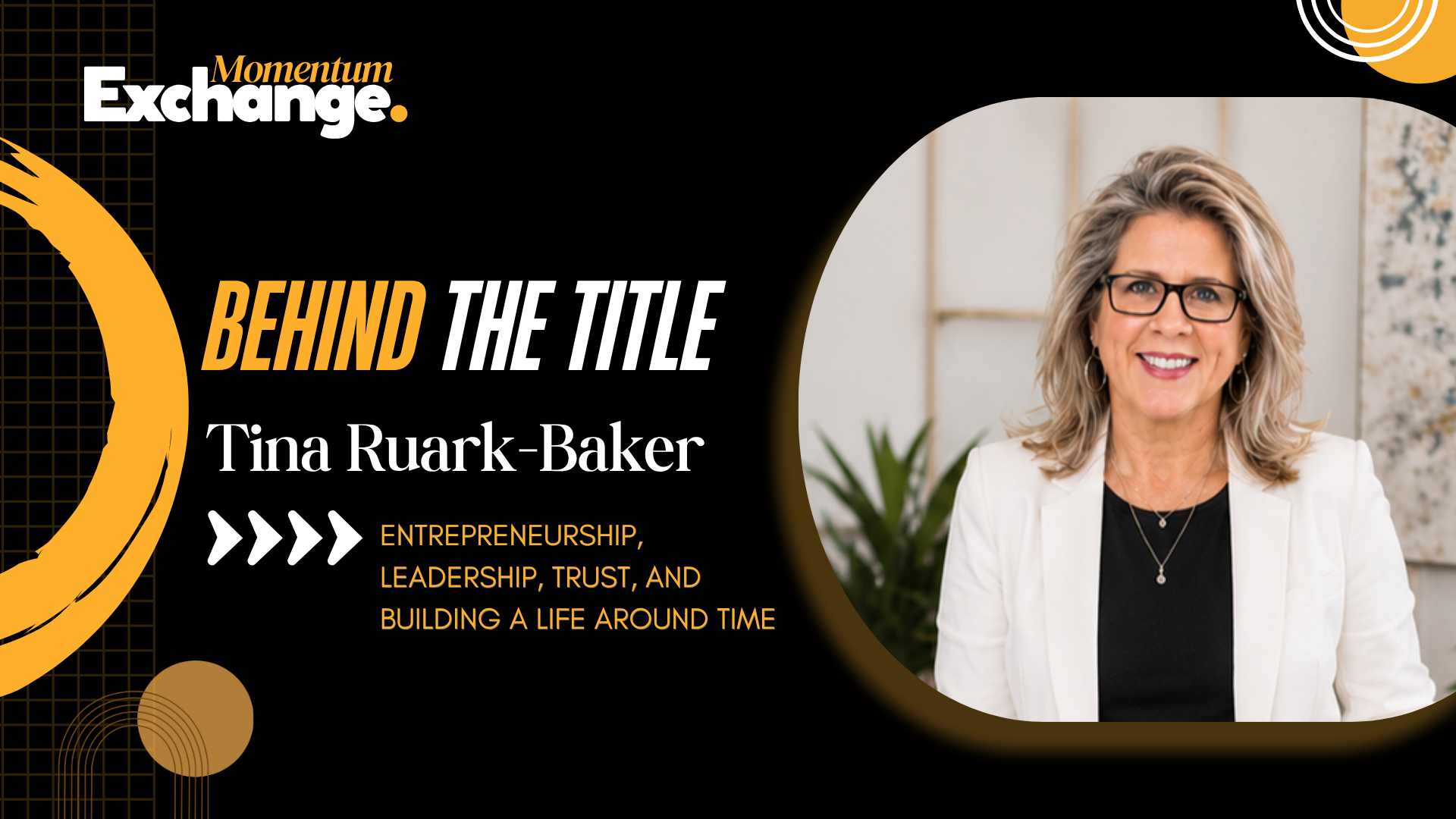
The first thing Tina Ruark-Baker said to me was, “Hey, girl, give me a second here.”
She had somehow ended up waiting for me in Google Meet while I was sitting in Zoom, which felt less like a technical problem and more like a perfect summary of modern professional life. After a few rounds of “Can you hear me?” Tina finally laughed and delivered the only reasonable diagnosis.
“It’s a Monday.”
Within minutes, she was telling me she had spent three days golfing and driving back and forth to Charlotte and was, in her words, “feeling my age today, girl.” This is Tina’s energy. She has a deep instinct for making you feel as though you have known her considerably longer than you actually have, and she does it without trying very hard.
It took approximately five minutes for me to understand that any attempt to write Tina’s story as a traditional executive profile would be utterly ridiculous.
Her career did not begin with a carefully mapped plan, a prestigious internship, or a mentor taking her aside and identifying her future potential. Honestly, that is rarely how the story begins for any leader I talk with.
Tina’s story began with cows.
It Started With Cows, Minnows and a Lot of Hustle
“I’m going to go way back because I’m an old salty dog,” she told me, laughing.
[
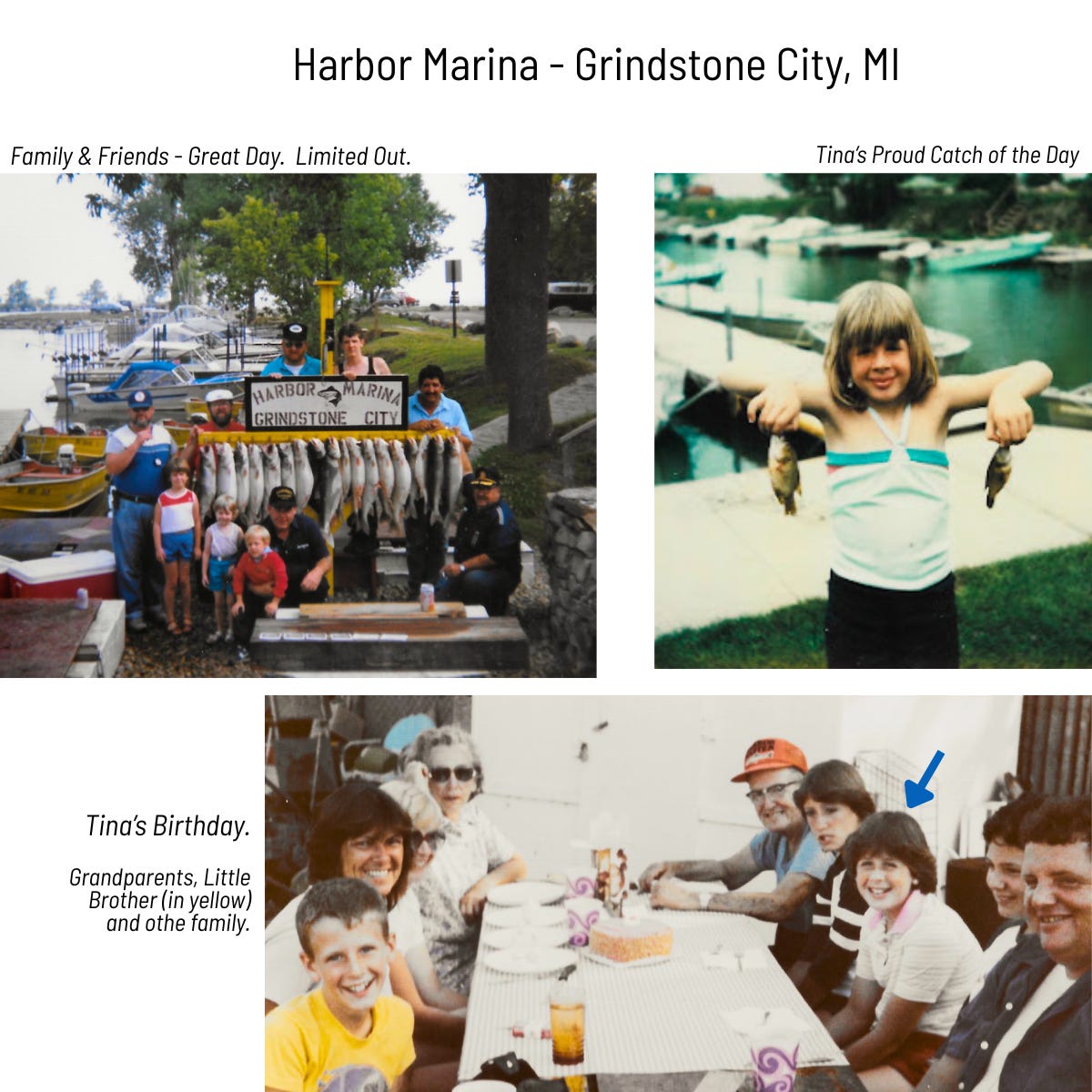
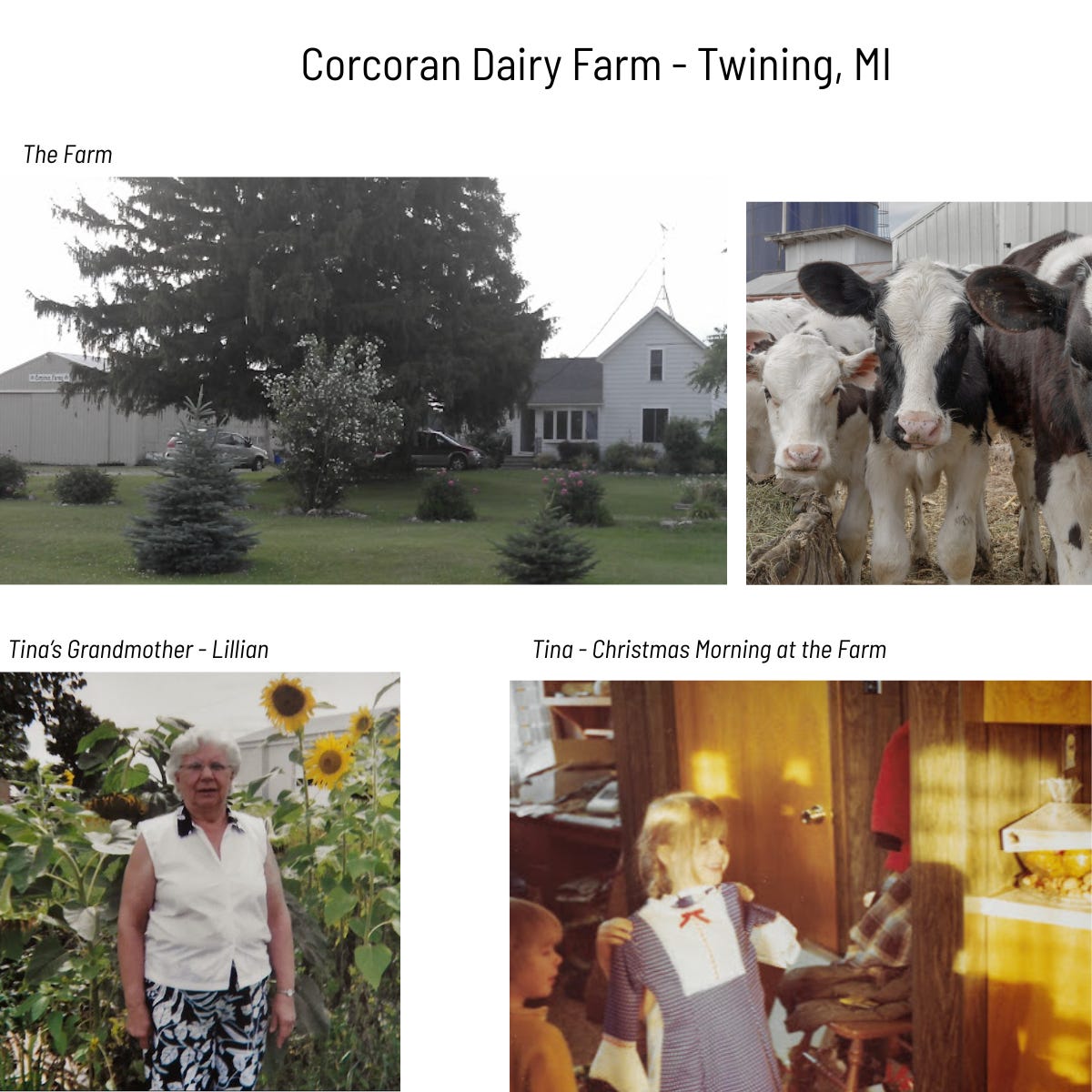
Tina grew up in Michigan, where one set of grandparents owned a dairy farm, and another owned a marina. Summers were divided between the two, which meant that while other children may have been heading off to summer camp, Tina and her cousins were milking cows, feeding calves, stocking soda machines, counting minnows, counting worms, and figuring out how to make a little extra money from whatever job happened to be in front of them.
“My mom and dad would do a drop-off, and that was our summer camp,” she said.
There was plenty of laughter and plenty of family, but there was also a very clear expectation that everyone contributed. Tina remembers watching her father work two or three jobs while her mother dealt with lupus, and the pressure of keeping a household running was not something she was shielded from. She learned early that when something needed to be done, you didn’t spend long debating whose responsibility it was. You figured out how you could help.
By 18, Tina had started her first business.
She worked part-time in staffing on a worker’s permit, learned how the industry worked, and realized there was no obvious reason she couldn’t do the same thing from home. What began as a way to earn extra money grew quickly, and she moved into office space and began hiring people. But there was a twist: several of the clients she was recruiting talent for said they weren’t happy with their office cleaners, and she saw an opportunity. She started another business, New Horizon Cleaning Company, that serviced only commercial office space, and she used some of her unemployed workers to clean buildings part-time in the evenings and on weekends. Even some of her cousins and family worked part-time to help.
That entrepreneurial streak expanded into a 1-(800) referral service connecting homeowners with licensed and insured contractors when Michigan snowstorms caused ice dams and garages to collapse. Her number even ended up on Detroit WXYZ (Channel 7) television, where viewers were told to “Call the Service Connection” if they needed an approved licensed contractor..” Two of her businesses were later acquired. Tina’s business operated a model she now compares to what most of us would recognize as an early version of Angie’s List. The key distinction is that Tina did this during the era of pagers and bag phones.
“This is back when I used a bag phone in my truck and had three pagers on my hip,” she said. “It was legit hustle.”
There is a temptation when looking backward at entrepreneurial careers to make every early decision appear visionary. Tina’s story is much simpler and, I think, far more interesting. She saw a need, figured out how to solve it, and then kept going when the solution became something bigger than she expected.
That instinct eventually carried her to New York after her company was acquired.
“I know no one in this city,” she remembered thinking. “I know nobody…. Not even a distant family member, and I’m moving my entire life to New York. Like, what?”
She went anyway, which becomes less surprising when she adds, “I knew that I wanted to have something of my own, because I never did well with being told what to say, think, and do, even as a kid.”
We both laughed because if there were ever an unofficial diagnostic question for entrepreneurship, “How do you feel about being told what to say, think, and do?” might be fairly effective.
It Was Always About the People
The more Tina talked, the clearer it became that her entrepreneurial instinct was only half of what she inherited from her childhood. The other half came from watching her father move through the world.
He worked in the automotive industry in Michigan and, from Tina’s description, was the kind of man whose arrival could change the atmosphere of a room.
“People would be like, ‘ Big D’s here,’” she recalled.
He knew people, he remembered them, and he was known for always making them laugh. More importantly, he seemed genuinely interested in the people around him.
“That just rubbed off,” Tina told me. “It’s about the people. It’s not necessarily about the transaction of business.”
That sentence became the thread I kept noticing throughout the rest of our conversation.
The businesses changed, markets shifted, and cities expanded. . Tina’s instinct to build relationships before transactions did not.
Her father also believed strongly in humor. Tina grew up with red hair and a face full of freckles, and at one point he convinced her, at age 6, that the freckles appeared because she had stood too close to a cow when it went to the bathroom.
Tina immediately went inside and tried to scrub them off with a brillo pad.
“He felt horrible,” she told me, laughing.
I told her I was not entirely convinced that the remorse had been immediate.
“He was that kind of jokester,” she admitted.
When I later asked who had influenced the way she leads, she came back to him again.
“Leading with humor was always his thing,” Tina said. “Make fun of yourself, and then everybody else is comfortable.”
There is something more substantial underneath that advice than simply being funny. Tina does not lead by creating distance between herself and the people around her. She creates enough comfort for people to speak honestly, admit when something is not working, ask for help, and occasionally laugh at the absurdity of whatever mess they are collectively trying to solve.
Her father shaped that approach, but Tina also pointed to a moment that changed how she thought about people, opportunity, and the way she wanted to spend her time.
That moment was September 11.
When I asked what has most affected how she leads today, Tina told me the answer wasn’t only a person; it was also an event.
“9/11 changed everything,” she said. “How am I going to wake up? How am I going to help? How am I going to breathe? How am I going to spend my time? Where am I going to spend my time?”
After witnessing the second plane fly low, directly over her head, to hit the second tower, then seeing, breathing, and feeling more than she ever wanted over the several days trying to get to her apartment on Long Island, she decided to fly back to Michigan to see her family. She mentioned sitting in her Dad’s backyard on a wooden swing; very few words came out, but she said, “Should move back to Michigan?” Her Dad held her hand and said, “Nope, that’s your home. If I can make it through Vietnam, you can make it through this. You have your NY friends & adopted family that need you there.”
Twenty-five years later, some of the people who stood beside her during that period are still among her strongest champions. Tina has since helped several of them step into businesses of their own over the past few years, because her instinct when someone asks, “How did you do this?” is not to guard the answer.
It is to make the road easier for them.
When Leadership Shows You Exactly Who You Do Not Want to Become
Tina’s approach to leadership was also shaped by an experience that looked far more impressive from the outside than it felt on the inside.
At one point in her career, she worked for a New York staffing company that appeared to be extraordinarily successful. Clients saw prestige, partnerships, sponsorships, and a team that looked like it had everything figured out.
Inside the company, Tina described a leadership group that operated like a “heavy hand” pressing constantly on its division heads.
“We never could do enough right.”
She and her colleagues entered meetings prepared to defend themselves before anyone had even asked a question. They created backup presentations in case they were called on, anticipated criticism that might never come, and spent enormous amounts of energy trying to protect themselves from the next blow.
Eventually, Tina stopped looking only at how the culture was affecting her and started looking at her team.
“They looked beat up.”
That detail stayed with me because leadership changes when you stop asking what you personally can tolerate and start asking what the people you are responsible for are being asked to absorb.
To the outside world, the company still looked exceptional.
“They thought we were the elite of the elite,” Tina said.
Then she told me that the CEO once informed her that there was no way an obese woman would ever be successful in New York City.
I stopped her because I genuinely thought I had misheard.
“He said that to you?”
“Who even says that to someone?” she replied. “I was a size 16 - really?”
At the time, Tina was managing twelve people and leading one of the company’s largest revenue divisions, yet somehow her slightly overweight body had become the metric this person decided was worth discussing.
Tina remembers crying on the train afterward while eating nachos.
“I was just bawling my eyes out, like, really? I’ll eat an Oreo.”
I laughed with her, partly because the delivery was very Tina and partly because sometimes humor is the only response that keeps someone else’s cruelty from owning the entire memory.
The experience did not make Tina less ambitious or less willing to lead. It made her much clearer about the environment she wanted to create for other people.
She knows what it feels like to enter a room already bracing for impact, and she has no interest in making anyone else feel that way.
Another lesson arrived later and taught her that even a leader who values trust still needs boundaries.
Tina had spent years building a relationship with a major client and was moving forward with a new project while waiting for one final contract signature. She trusted the woman she had been working with, and every conversation suggested the approval was coming.
Instead, Tina learned that the woman had never received authorization for the project and had copied Tina’s signature from an older contract onto the new agreement.
“I did not sign it,” Tina remembers having to explain. “It is my signature, but you can clearly see that it’s been cut and pasted on there.”
An investigation followed, the client lost her job, Tina’s company lost the deal, and a friendship that had mattered to Tina disappeared with it.
“That was a very huge lesson for me, because I lead with trust.”
She didn’t walk away believing people should be treated with suspicion. That would have required Tina to abandon one of the qualities that had built her career in the first place. Instead, she learned that trust works better when it has structure around it.
Her practical takeaway was refreshingly uncomplicated.
“Get everything signed.”
I remain a strong supporter of trust as a leadership principle, but I am also very fond of DocuSign.
Sometimes “Enough” Becomes the Smartest Strategy
For someone who has spent most of her life moving toward the next opportunity, one of Tina’s most significant decisions began when she and her husband looked at a life that technically worked and admitted they no longer wanted it.
They were living in Stony Brook on Long Island while Tina commuted close to two hours each way into New York City, and the time, money, and energy required to maintain that routine had started to feel increasingly difficult to justify. When a $14,000 property tax bill arrived for what Tina describes as a decidedly non-mansion-sized house, the frustration became a much larger conversation about what they were doing and why they were still doing it.
“We didn’t have a mansion, girl,” she told me. “It was basic.”
They began looking honestly at how much time disappeared into commuting, how much money went into maintaining the lifestyle, and how often they had continued accepting those tradeoffs simply because they had become familiar.
Eventually, they reached the point Tina remembers simply as, “Enough. Like, enough.”
They moved to Charlotte and negotiated arrangements that allowed both of them to keep their New York jobs and salaries while working remotely, making them some of the earliest people in their organizations to adopt a way of working that was still unusual at the time. About a year later, COVID arrived, and much of corporate America abruptly discovered that employees could, in fact, work without occupying the same office every day.
Today, Tina works from a home in a community she loves, with a palm tree outside and a golf cart in the garage. Her husband works only a few rooms away, which means their modern office culture occasionally consists of checking in at The Baker’s Cafeteria for lunch and determining who last let the dog outside.
During our conversation, Tina looked out her window and casually reported that a neighbor was walking across the street and was probably on his way to play golf.
“This is my world now,” she said, and of course I had to reply with, “You should grab a picture for the article”
Considering that the younger Tina once moved to New York without knowing a single person there, I had to admit that the evolution was fairly impressive.
What has not changed is Tina’s tendency to keep scanning the horizon for whatever might come next.
She describes her brain as an “Idea Factory,” and after spending an hour with her, I can confirm that the factory appears to be operating at full capacity. Tina can be driving home from Charlotte thinking about someone she should call, planning how to close revenue by the end of the year, and mentally wandering into what her business should look like in the third quarter of 2027 before the first idea has completely finished forming.
At one point, I told her that one of the hardest things for people whose minds work this way is accepting that not every idea deserves to become a project. Sometimes an idea can simply be interesting without requiring a business model, landing page, or launch plan.
Tina agreed completely and then, within minutes, began wondering aloud whether she should build stronger connections with the golf industry.
I recognized immediately that neither of us was ready to teach the class on idea restraint.
Tina Measures Success by How Many Other People Get to Win
When I asked Tina what she was proudest of professionally, I expected her to mention the company she sold, the large clients she had won, or one of the awards that she admitted were now sitting in a box rather than prominently displayed.
Instead, she talked about people.
She told me about former clients and colleagues from 25 years ago who had recently reached out to say they were proud of her. She talked about people she had coached into building businesses of their own, including one woman who recently landed a keynote that brought in nearly $30,000.
“That tells me I’m in the right spot.”
What seemed to matter to Tina was not simply that she had been successful. She cared that some of what she knew had helped someone else become successful too.
That distinction explains a lot about her leadership. Tina does not seem particularly interested in being the only person in the room with access, knowledge, connections, or opportunity. If she knows how to avoid a mistake, she will tell you. If she knows someone who can help, she will probably introduce you. If she sees an opportunity that would be better for someone else than for herself, she is remarkably comfortable passing it along.
Her belief that generosity eventually circles back has shown up in ways that even Tina could not have planned.
Years ago, she donated one of her abstract paintings to a silent charity auction in Charlotte, supporting women’s shelters. A woman at the event became involved in bidding on the piece without realizing that Tina was the artist.
That woman happened to be Tina’s doctor.
Later, when the doctor began building a large medical office in Charlotte, she called Tina and asked whether she could create the artwork for the space. Tina’s work now hangs throughout the office.
“That’s a perfect example of the pay it forward,” Tina told me.
As she described it, I realized that the same pattern appeared throughout almost every part of her career. Tina notices people, pays attention to what they need, shares what she knows, and looks for ways to connect them with someone or something that can move them forward.
She is also very aware that professional life often rewards people for pretending they do not need any of those things.
When I asked what everyone in business pretends is normal even though it is actually ridiculous, Tina immediately brought up money.
“Girl, it’s the money,” she said.
She sees business owners show up to networking events talking about growth, clients, and success while privately worrying about cash flow, recurring revenue, and whether enough is in the pipeline to support the image everyone else is seeing.
What Tina enjoys is not exposing those problems. She likes creating enough trust for someone to admit they exist.
“I love it when I figure out where somebody has a bleed, and I’m able to help with that.”
For Tina, being inclusive is not simply about making sure everyone has a seat in the room. It is also about creating the kind of room where people are comfortable enough to say what is actually happening once they get there.
Trust Became Real When Tina Showed Everyone What Was Under the Hood
That philosophy is part of what drew Tina into The Momentum Exchange as one of our founding members.
She has been part of plenty of communities and professional networks over the course of her career, so when I asked what had felt most valuable about this one, she immediately talked about the people and the trust.
“I would probably say the people, super welcoming, super engaging, and trusting. But the other side of that is having a trusted space.”
During one of our Decision Rooms, she opened up her actual business model to the group and shared the percentages, the numbers, and the seven revenue streams she was trying to manage. Rather than presenting a polished version of her business and asking everyone to admire what she had built, Tina showed the room where she was struggling and asked what they would change.
“I had enough trust in the space to be able to show under the hood,” she said. “That was super scary, but I did it.”
I remember that Decision Room because Tina’s willingness to be candid changed what became possible for everyone else in the conversation. When one senior leader is willing to show the actual numbers and ask, “What would you do if you were me?” it becomes considerably harder for everyone else to maintain the fiction that leadership means always arriving with the answer.
Afterward, members reached out to me to say how powerful the conversation had been. Tina had created permission for other people to bring the unfinished version of a problem into the room instead of waiting until they could package it into something presentable.
“I don’t want to be pitched and sold,” she told me. “We should be here helping each other.”
That sentence could just as easily have come from the marina in Michigan as it did from Tina sitting in a virtual Decision Room decades later.
The tools changed, the business became more sophisticated, and the stakes grew larger, but Tina’s operating principle remained remarkably consistent. The point was still to help the people around her get somewhere better.
The Next Big Thing Tina Wants to Build Is More Time
Tina is still relentlessly curious about what comes next, but the question has changed as she has gotten older.
She turned 55 this year, and the number carries more significance for her than a typical birthday. She has officially outlived her father, lost 55 pounds, and moved with her husband into the home they had imagined creating for themselves.
She calls it “the big five-five year.”
When I asked what was pulling her toward the next chapter of her life, I expected her to talk about another business opportunity. Instead, she talked about time.
“What’s pulling me into the next chapter is turning 55,” Tina told me. “Time. That’s my next chapter, is time.”
Tina has no intention of giving up ambition, and she is refreshingly honest about enjoying both money and what she calls her “expensive habits of golf and travel.” What she no longer wants is to assume that professional commitment has to be measured by how many hours she spends sitting at a desk.
She wants to grow the business intelligently, use technology where it can genuinely make her more effective, maintain the human relationships that built her career, and create enough flexibility to enjoy the life all of that work was supposed to support.
One of those experiences is already on the calendar because her husband entered their names into a lottery for tickets to The Open in Scotland, and Tina casually mentioned that there may or may not have been bourbon involved in the decision, which whatever was in the glass helped them enter and….
They won.
“We’re going to Scotland in July,” she told me. “That wasn’t on the radar. That wasn’t planned.”
I immediately suggested that she find a client in Scotland so the trip could be classified, at least emotionally, as business development.
“Don’t think I’m already not working that,” she replied.
I should have known better than to assume the Idea Factory had not already considered it.
Near the end of our conversation, I asked Tina what the younger version of herself back in Michigan would find most surprising about the woman she became.
Leaving Michigan would be the first shock because, as Tina put it, “Nobody leaves.”
Then she imagined telling that younger version what happened next.
“Holy shit, you went to New York City, like, what?”
As we kept talking, however, the most important part of the answer became less about where Tina had gone and more about how many people she had managed to carry with her.
Her husband regularly marvels at how connected she remains to people from every chapter of her life. Tina can be standing on a golf course and suddenly remember that Aunt Betsy is turning 76 and needs a birthday message.
As Tina laughed about it, I realized that her life has changed almost beyond recognition while the most important parts of her have remained remarkably consistent.
The dairy farm led to entrepreneurship, Michigan led to New York, and New York eventually led to Charlotte. Pagers gave way to smartphones, conference rooms gave way to Zoom calls, and Tina’s ambitions evolved from building the next business to building a life with more freedom around it.
[
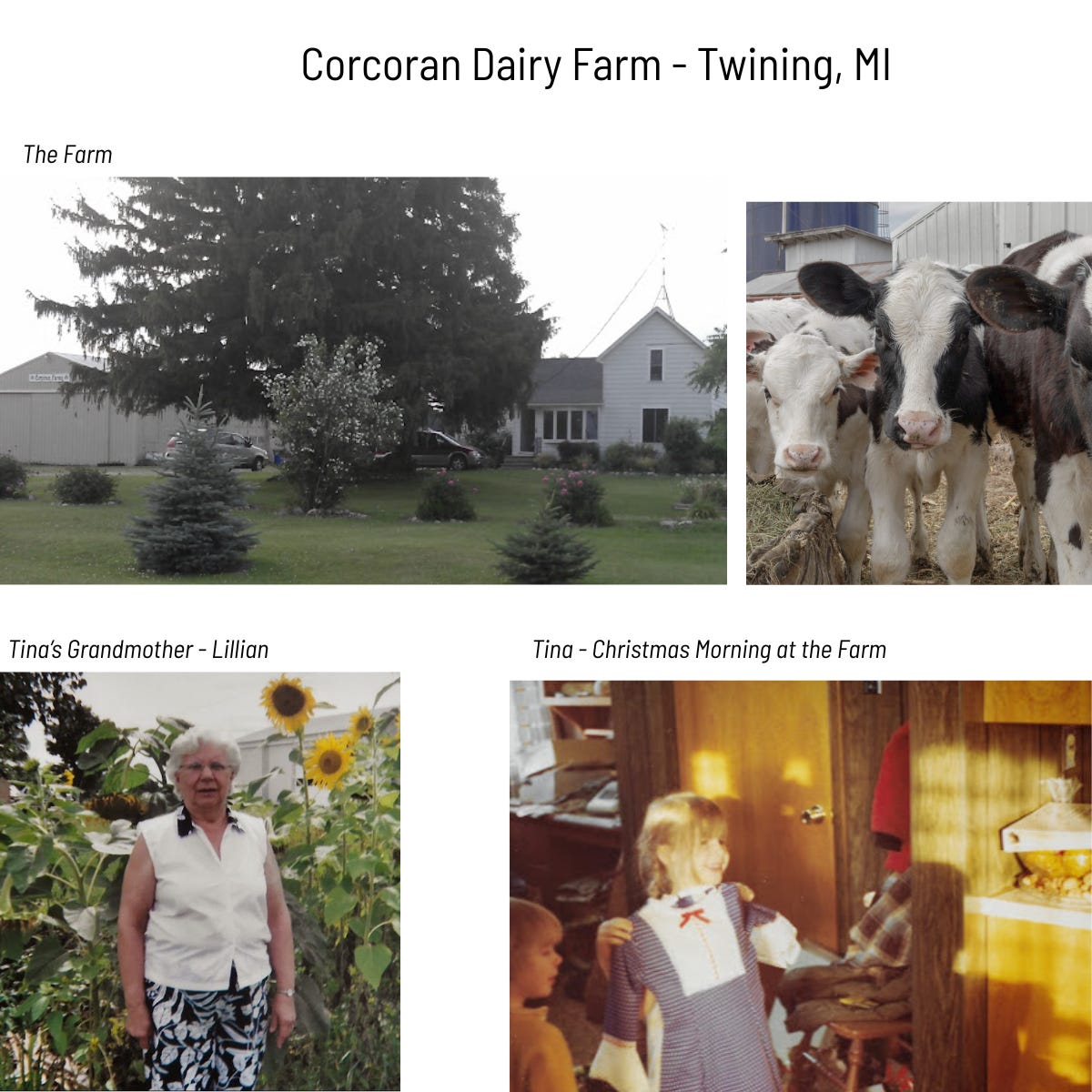
Through every version, she kept returning to the same instinct that appeared when she was still counting minnows and stocking soda machines with her family.
She looks around, notices what someone needs, and asks herself how she can help.
That instinct shaped the entrepreneur she became, the leader she chose to be after experiencing the damage poor leadership can cause, and the kind of person who would rather share a lesson than make someone else earn the same scar.
Tina is still looking for whatever comes next, because I am fairly certain she would become deeply uncomfortable if there were nothing new on the horizon.
The difference now is that she is no longer chasing the next big thing simply because it is bigger. She is looking for the kind of growth that creates more time, more freedom, stronger relationships, and more opportunities to bring other people with her.
If she manages to find a Scottish client somewhere along the way, I suspect she will consider that a perfectly acceptable bonus.
Connect with Tina Ruark-Baker
Linkedin:
https://www.linkedin.com/in/tina-ruark-baker/
Website
Join Momentum Exchange and Get 15% off
Thanks for reading! This post is public so feel free to share it.